

Key takeaways
- Disruption is now constant, so the speed of re-planning matters more than the accuracy of any single plan.
- Agility comes from three things: one source of truth, fast scenario planning and clear decision rights.
- AI handles the forecasting and exceptions; optimisation finds the best feasible plan; planners make the call.
For decades, supply chains were built for efficiency. Plan once a month, lock the schedule, squeeze out cost. That model worked when demand was predictable and lead times were stable. Neither is true any more.
Today, a single promotion, a late container or a sudden cold snap can wipe out a month of careful planning. The brands that win are not the ones with the most accurate forecast. They are the ones that can see a change coming, understand its impact and adjust the plan before the shelf goes empty.
Volatility is the new normal
Most mid-sized consumer goods companies we speak to describe the same pattern. Demand swings are larger than they used to be, supplier reliability is lower, and customers expect the same service level regardless. Retailers have shortened their order windows, and e-commerce channels add a layer of day-to-day noise on top.
The result is a planning team that spends most of its week firefighting. By the time a new plan is ready, the situation it was built for has already changed.
“The goal is not a perfect forecast. It is a plan you can change in minutes instead of days.”
What agility actually means
Agility is often used as a buzzword, but in planning it has a precise meaning: the time between a change in the real world and a better decision on the floor. Shorten that loop and everything else improves, from service levels to working capital.
In practice, agile supply chains share three traits:
- One source of truth. Demand, supply, inventory and capacity live in one model, so every team works from the same numbers.
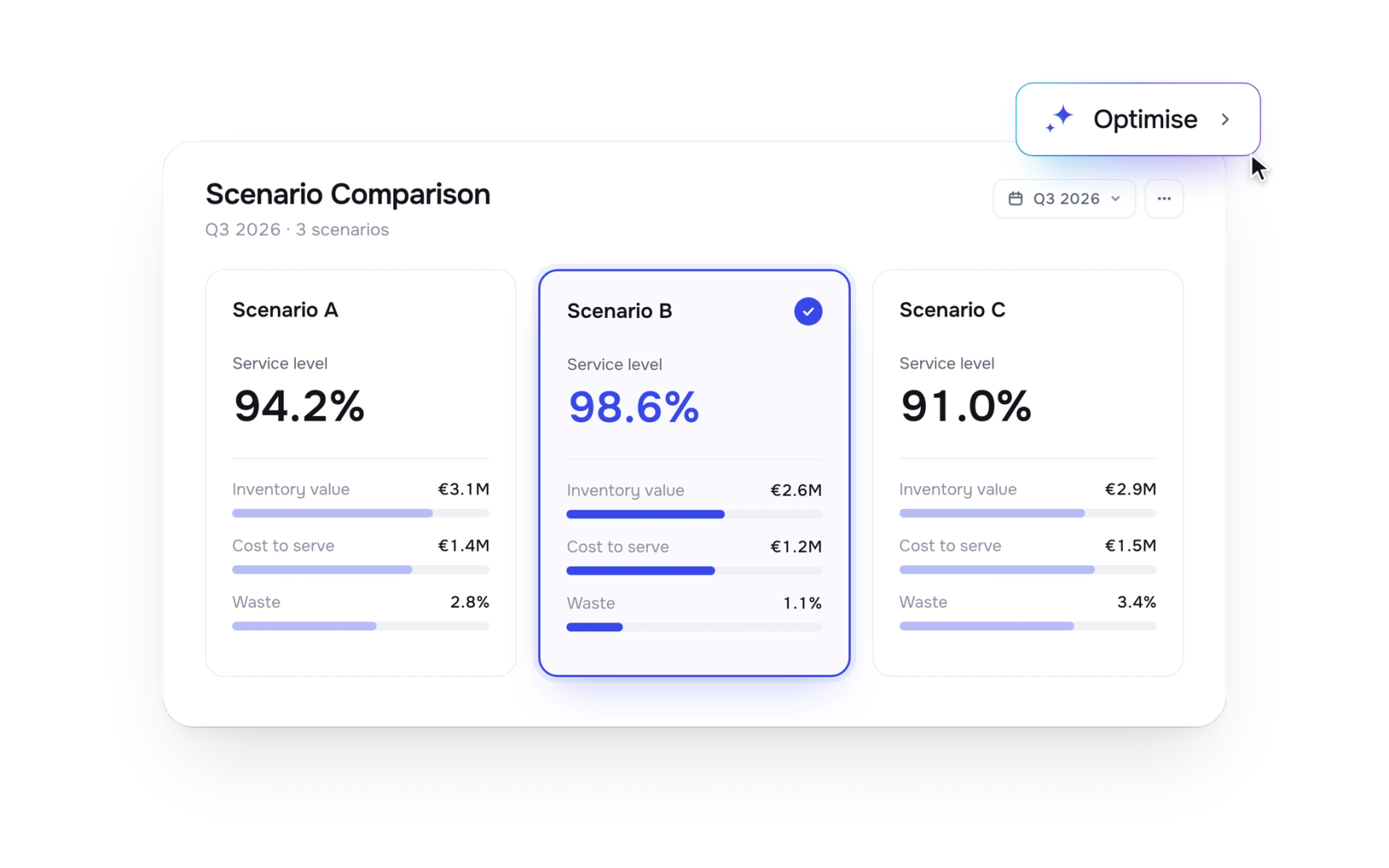
- Fast scenario planning. Planners can ask “what if?” and see the trade-offs between service, cost and waste before they commit.
- Clear decision rights. Everyone knows who decides what, and when. The weekly S&OP meeting becomes a decision meeting, not a reporting one.
Why spreadsheets hold teams back
Spreadsheets are flexible, familiar and free. They are also the main reason most planning teams cannot move faster. Every update means copying data across files, checking formulas and reconciling versions. One planner owns the master file, and when they are on holiday the process slows to a crawl.
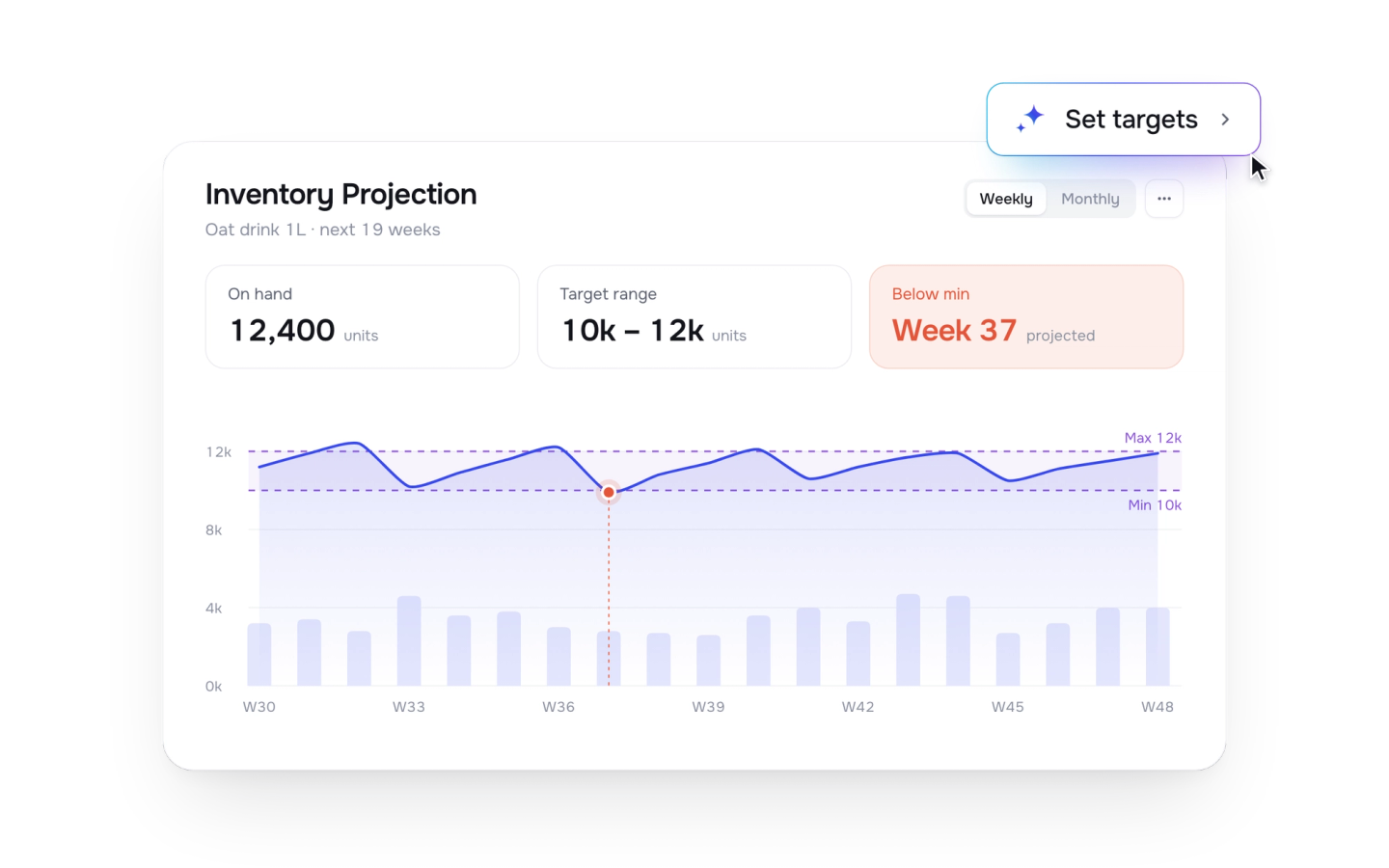
More importantly, a spreadsheet can show you a plan, but it cannot tell you whether it is a good one. It does not know your production constraints, your shelf-life rules or the cost of a changeover. So planners fall back on experience and safety stock, and working capital quietly grows.
AI where possible, optimisation where needed
Modern planning combines two different technologies, each doing what it does best. AI is excellent at spotting patterns in noisy data: forecasting demand, detecting anomalies and flagging the exceptions that need attention. Mathematical optimisation is excellent at finding the best plan that respects every constraint, from line capacity to minimum batch sizes.
Together, they turn planning from a manual, reactive task into a guided one. The system proposes; the planner reviews, adjusts and decides. Experienced planners stay in control, but spend their time on judgement rather than data wrangling.
- Forecasts update automatically as new orders and signals come in.
- Exceptions are ranked by impact, so the team works on what matters first.
- Every plan can be compared against alternatives on service, cost and waste.
Where to start
Becoming more agile does not require a two-year transformation programme. The companies that move fastest start small: one product group, one site, one planning cycle. They connect their ERP data, run the new process alongside the old one for a few weeks, and let the results make the case.
If you want to see what that could look like for your business, our benefits calculator gives you a first estimate in a few minutes, based on your own numbers.